

Sendy Audio Egret Review: Quiet Luxury With Planar Control
Sendy Audio’s Egret has landed with the earphonia.com team, bringing its black walnut cups, substantial build, and planar magnetic driver with it.
We’re keen to hear whether this £800 headphone can match its quietly luxurious physical presentation with the kind of controlled, textured sound its design promises.
Sendy Audio Egret
£800
There’s a type of headphone that barges in immediately and starts waving its arms about. You know the sort. Sharpened treble, bass shoved up like it’s trying to win an argument, and a soundstage stretched so wide it feels like someone pulled the image apart with both hands just to make you go “wow” in the first thirty seconds.
The Sendy Audio Egret doesn’t do that.
Which, honestly, is kind of the point.
It doesn’t jump at you. It doesn’t slap on fake excitement or try to sell itself with that showroom-demo nonsense. It just turns up quietly, looking annoyingly lovely, and gives you the sense that somebody actually cared about the whole thing rather than just the bits that look good in a spec list.

And before you even play anything, that care is right there.
The Egret feels premium in the old sense of the word. Not “premium” as in shiny trim and marketing copy pretending plastic is a lifestyle choice, but premium as in weight, finish, texture, proportion. The stuff you notice when you pick it up and your hand goes, ah, okay, this wasn’t just assembled, it was considered.
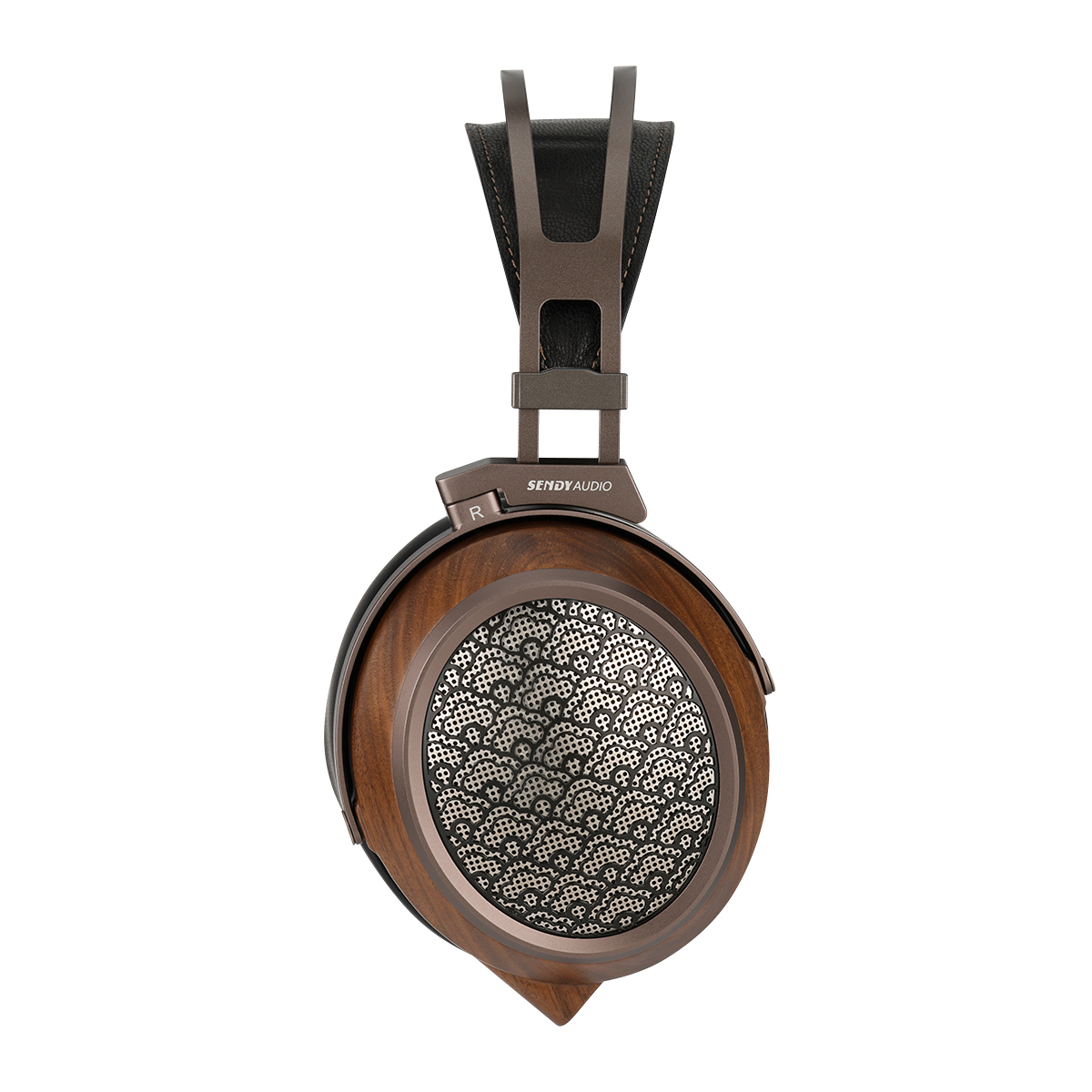
The black walnut cups set the mood straight away. High-density North American black walnut has a proper seriousness to it: dark, dense, finely grained, with enough natural variation that each pair feels like it has its own little history. On cheaper headphones, wood can look like a badge. A sort of “look, craftsmanship!” sticker in material form. Here it feels built in, not pasted on. The cups have substance. They look shaped, worked, sanded, finished. You can see the time in them.

Repeated sanding, polishing, multilayer coating, natural air-drying — all those production details actually matter here because the result is visible. The wood has depth to it. It catches light softly, almost like old furniture rather than consumer tech. There’s none of that flat synthetic gloss that makes wooden bits look like laminate from across the room. It’s more small handmade object than mass-market accessory, and tbh that makes a difference before the music even starts.
The rest of the chassis keeps that same feeling going. The metal parts — brackets, frame pieces, structural hardware — are CNC-machined from aviation aluminium and finished in gunmetal anodisation, which suits the Egret weirdly perfectly. It’s refined without getting flashy. No jewellery-box nonsense. No trying to look expensive by adding fiddly bits everywhere.

It has presence, but it doesn’t peacock.
The transitions between materials are clean. The tolerances feel tight. The moving parts don’t have that faint loose, hollow confidence-killer you sometimes get when a product photographs better than it handles. Everything feels like it belongs where it is. The Egret avoids that very common luxury trap where “expensive” apparently means ornate, shiny, and slightly desperate. This looks expensive in the way properly made objects often do: it doesn’t keep telling you.


